
The world of computer vision has evolved into an advanced field that pushes boundaries with every new innovation. Deep learning frameworks, architectures, and segmentation models continue to transform how industries apply AI to complex tasks. Among these revolutionary models stands Mask2Former, a versatile framework designed to tackle image segmentation challenges across various domains.
While the capabilities of Mask2Former attract attention, many researchers and developers often ask: Can Mask2Former run on GPU? Since GPUs remain the backbone of accelerating deep learning workloads, this question is both practical and necessary. Understanding GPU compatibility helps practitioners decide if Mask2Former is the right choice for real-world applications that demand scalability.
This article explores the GPU compatibility of Mask2Former in depth, highlighting its requirements, performance benchmarks, benefits, limitations, and use cases. Whether you are a data scientist, student, or enterprise professional, this breakdown will equip you with clarity on how GPU acceleration transforms Mask2Former from theory into production-ready practice.
Understanding Mask2Former
What is Mask2Former
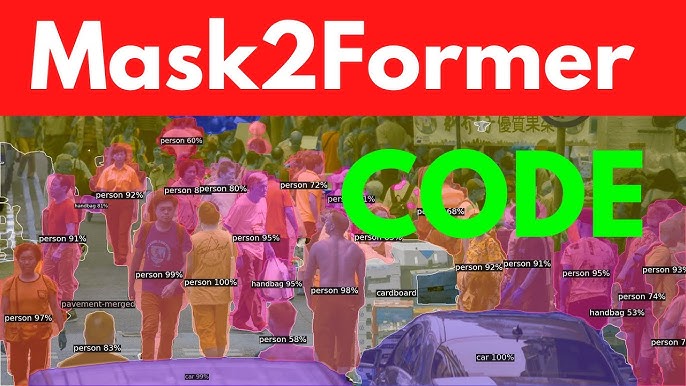
Mask2Former is a universal image segmentation architecture introduced by Facebook AI Research. Unlike earlier models focusing on a single segmentation type, Mask2Former provides a unified framework for semantic, panoptic, and instance segmentation. It leverages a transformer-based design that allows the model to generalize effectively across tasks.
At its core, Mask2Former eliminates the need for task-specific architectures. Its foundation rests on masked attention mechanisms, ensuring efficient region-level understanding. This approach not only simplifies workflows but also enhances adaptability, which is vital for deployment in dynamic AI ecosystems.
The model integrates modern deep learning techniques to address bottlenecks in computation, training scalability, and feature extraction. These attributes make it one of the most adaptable segmentation frameworks of the current AI generation.
Why Mask2Former Stands Out
Unlike segmentation models built with rigid pipelines, Mask2Former is highly flexible. Its architecture focuses on end-to-end training and inference, enabling consistency across diverse datasets. The reliance on transformers also ensures superior performance on both high-resolution and complex images.
Another standout feature is its ability to merge different segmentation tasks into a single cohesive structure, reducing the effort needed to maintain multiple models. This makes Mask2Former a time-saving yet highly powerful option for computer vision workflows.
Mask2Former also supports integration with modern toolkits like PyTorch, making it easier for practitioners to experiment, extend, and adapt it into their pipelines without reinventing entire workflows.
Evolution from Previous Models
Earlier segmentation models such as Mask R-CNN provided significant breakthroughs but lacked the universality needed for multi-task deployments. Mask2Former addresses these limitations by combining the strengths of convolutional backbones with the generalization power of transformers.
This evolutionary leap ensures robustness while maintaining a balance between flexibility and efficiency. In real-world scenarios, this allows organizations to reduce computational costs by deploying a single Mask2Former instance across multiple segmentation tasks.
The transition from legacy architectures to Mask2Former highlights the natural progression toward transformer-dominated deep learning, setting the tone for the future of AI research and applications.
GPU Compatibility of Mask2Former
Can Mask2Former Run on GPU
Yes, Mask2Former can run on GPU, and in fact, GPUs remain the most recommended hardware for achieving optimal performance with this model. Since the architecture leverages transformers, heavy computation is inevitable. Running Mask2Former on a CPU is possible but inefficient for production workloads.
GPUs, with their parallel computation capabilities, accelerate both training and inference significantly. Researchers consistently report that GPU acceleration makes Mask2Former viable for large-scale datasets. Without GPU support, the time required for training and real-time segmentation would increase exponentially.
Thus, the practical answer to whether Mask2Former runs on GPU is a definitive yes—it not only runs but thrives when executed on modern GPU hardware.
GPU Requirements for Mask2Former
To achieve stable performance, Mask2Former requires GPUs with sufficient VRAM capacity, typically ranging from 12GB to 24GB depending on dataset size and resolution. Popular GPUs like NVIDIA RTX 3090, A100, or even consumer-grade RTX 3080 cards are often used.
Framework support also plays a crucial role. Since Mask2Former is implemented in PyTorch, CUDA-enabled GPUs with compatible drivers and libraries are essential. Practitioners must ensure their environment supports CUDA, cuDNN, and the latest PyTorch distributions.
Mask2Former scales across single and multi-GPU environments, providing flexibility for both small-scale research and enterprise-scale deployment scenarios.
CPU vs GPU Execution
When running on CPU, Mask2Former suffers from high latency and limited throughput. Training epochs may stretch to impractical durations, making CPU execution unfeasible for anything beyond testing.
In contrast, GPUs enable parallelized matrix multiplications and accelerated transformer computations. The difference is often measured in hours versus days for training. For inference tasks, GPU execution ensures real-time or near real-time segmentation performance.
The comparison strongly favors GPUs for any practical application, reaffirming that Mask2Former’s full potential can only be unlocked through GPU acceleration.
Benefits of Running Mask2Former on GPU
Enhanced Training Speed
One of the clearest benefits of GPU acceleration is faster training times. Mask2Former’s transformer layers rely heavily on computations that GPUs handle exceptionally well.
With GPU optimization, training cycles that might take weeks on CPUs can be completed within days. This speed advantage allows researchers to experiment with multiple hyperparameters, datasets, and training strategies, ultimately producing higher-quality models.
Quicker training translates into shorter development cycles and faster time-to-market for AI-driven solutions.
Improved Inference Efficiency
Inference is critical for real-world applications where predictions must be generated instantly. GPUs enhance inference performance, ensuring results are computed within milliseconds.
This efficiency makes Mask2Former suitable for real-time use cases, including autonomous driving, medical diagnostics, and video analytics. Organizations deploying AI pipelines demand low-latency inference, and GPUs deliver precisely that.
Real-time performance powered by GPUs elevates Mask2Former beyond research into full-fledged production-ready deployments.
Scalability and Large Datasets
Modern datasets often contain millions of high-resolution images. Processing such datasets without GPU acceleration would be impractical. GPUs allow Mask2Former to scale effectively while maintaining accuracy and throughput.
- Enables distributed training across multiple GPUs
- Reduces bottlenecks in handling larger batch sizes
- Supports scaling from research to enterprise production
This scalability ensures that Mask2Former remains relevant for projects of all sizes, from academic prototypes to industrial-scale applications.
Challenges of Running Mask2Former on GPU
Hardware Costs
While GPUs significantly enhance Mask2Former performance, they also introduce high hardware costs. Purchasing GPUs such as the NVIDIA A100 can be expensive for smaller organizations or independent researchers.
Even though cloud-based GPU rentals offer a solution, recurring costs can accumulate. This financial challenge often restricts accessibility to Mask2Former for underfunded projects or educational setups.
Organizations must balance between infrastructure investments and the long-term benefits of GPU-accelerated performance.
Memory Limitations
Mask2Former’s transformer backbone is memory-intensive, especially when dealing with high-resolution images or larger batch sizes. GPUs with limited VRAM may encounter out-of-memory errors.
- Training with 4K images requires GPUs with higher VRAM
- Gradient checkpointing may be necessary to optimize memory
- Multi-GPU setups often become mandatory for large projects
Managing memory efficiently remains a challenge, even when GPUs are available.
Software Dependencies
Running Mask2Former on GPU requires a carefully configured environment. Users must align CUDA, cuDNN, and PyTorch versions with GPU drivers.
Compatibility issues often arise, leading to failed installations or runtime errors. Additionally, deployment in production systems requires containerization or dependency management tools to ensure stability.
The technical expertise required to manage these dependencies often becomes a barrier for beginners.
Practical Applications of Mask2Former on GPU
Real-Time Autonomous Systems
Autonomous driving and robotics rely heavily on accurate segmentation. Mask2Former running on GPU ensures vehicles process sensor data in real time.
This capability enhances safety, decision-making, and efficiency. Without GPU acceleration, such systems would experience dangerous delays in response time.
As adoption grows, GPU-powered Mask2Former is becoming a cornerstone of intelligent transportation solutions.
Healthcare Imaging
Medical imaging requires precise segmentation of scans such as MRIs and CTs. Mask2Former on GPU provides the accuracy and speed needed for diagnostics.
- Detects tumors with high reliability
- Enables automated radiology workflows
- Supports large hospital imaging pipelines
This integration can improve patient outcomes and reduce workloads for healthcare professionals.
Video Analytics and Surveillance
Video feeds generate massive amounts of data that demand real-time analysis. Mask2Former powered by GPU acceleration makes large-scale surveillance possible.
Applications include crowd monitoring, anomaly detection, and smart city infrastructure. Real-time segmentation ensures actionable insights without delays.
Organizations across security and urban management benefit from the efficiency and reliability provided by GPU-enabled Mask2Former deployments.
Future of Mask2Former with GPU Advancements
GPU Technology Evolution
As GPU architectures evolve, their ability to support complex AI models improves. Next-generation GPUs from NVIDIA and AMD promise higher memory bandwidth, increased parallelism, and reduced energy consumption.
Mask2Former will directly benefit from these improvements, enabling faster training and real-time deployment even for ultra-high-resolution datasets.
This synergy ensures the long-term scalability of the framework.
Integration with Cloud Platforms
Cloud providers are increasingly offering GPU-powered AI services tailored for advanced models. Services like AWS EC2 P4d, Google TPU/GPU, and Azure ML make running Mask2Former more accessible.
- Lowers entry barriers for small organizations
- Reduces upfront hardware investments
- Provides on-demand scalability
This integration allows Mask2Former to reach a wider audience across industries.
Potential for Edge Deployment
As GPUs become more compact and efficient, deploying Mask2Former at the edge level becomes feasible. Edge deployment ensures real-time segmentation without relying on centralized servers.
This is particularly valuable for IoT devices, drones, and mobile robots where latency must be minimized. Future GPU innovations will make edge-based Mask2Former deployments practical and widespread.
Conclusion
Mask2Former represents a milestone in segmentation research and application, offering a universal solution for multiple tasks. The question of whether Mask2Former can run on GPU is answered with clarity: not only does it run, but GPUs unlock its full potential. From faster training cycles to real-time inference, GPU acceleration ensures Mask2Former achieves performance levels required in modern AI applications. As GPU technology advances, Mask2Former’s scalability, efficiency, and accessibility will continue to expand across industries worldwide.