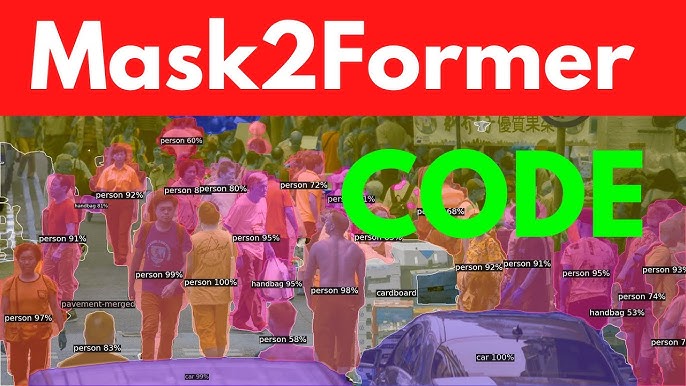

Mask2Former is an advanced framework designed for high-precision image segmentation tasks. This powerful tool leverages transformer-based architectures to improve object recognition and segmentation accuracy. Researchers and developers seeking state-of-the-art performance often turn to Mask2Former due to its robustness and flexibility.
The framework supports various segmentation tasks including instance, semantic, and panoptic segmentation. Its modular design allows seamless integration into existing pipelines. Users can customize and extend its components according to project requirements.
Download Mask2Former Code?
Mask2Former is a cutting-edge model in computer vision, revolutionizing tasks like image segmentation with its transformer-based architecture. Researchers, developers, and enthusiasts alike seek its code to implement, customize, or experiment with this powerful tool. Knowing where to download the official Mask2Former code ensures you access reliable, well-documented resources to kickstart your project.
The open-source community plays a vital role in making advanced models like Mask2Former accessible. GitHub, a hub for collaborative coding, hosts the official repository, offering the latest updates and community support. This article guides you through trusted sources, setup steps, and practical tips to download and use Mask2Former effectively.
Whether you’re building applications or conducting research, downloading the right code is the first step. This guide covers official repositories, alternative platforms, and best practices to ensure a smooth experience. Let’s explore where and how to access Mask2Former code seamlessly.
Official GitHub Repository for Mask2Former
Why GitHub Is the Primary Source
GitHub stands as the go-to platform for open-source projects like Mask2Former. The official repository, maintained by the model’s creators, offers the most reliable and up-to-date code. It includes detailed documentation, ensuring you understand the codebase’s structure. You’ll also find community contributions, addressing bugs or adding features. Accessing the repository directly guarantees authenticity and support.
Steps to Download from GitHub
Downloading from GitHub is straightforward but requires some setup. First, visit the official Mask2Former repository, typically hosted under the author’s or organization’s account, like Meta AI. Click the “Code” button to download a ZIP file or clone the repository using Git. Ensure you have Git installed and a compatible environment. Always check the repository’s README for specific instructions.
Navigating the Repository Structure
The Mask2Former repository is organized for ease of use. Key folders include source code, pre-trained models, and configuration files. The README often outlines dependencies and setup steps. Scripts for training and inference are clearly labeled, helping you start quickly. Familiarizing yourself with the structure saves time during implementation.
Alternative Platforms for Mask2Former Code
- Hugging Face: Hosts model weights and sometimes code snippets for Mask2Former. It’s ideal for quick access to pre-trained models but may lack full codebase details.
- Papers with Code: Links to official repositories and community implementations. It’s a great starting point to explore Mask2Former variants.
- Google Colab Notebooks: Offers ready-to-run demos with Mask2Former code. Perfect for testing without local setup, though less customizable.
Hugging Face as a Resource
Hugging Face is known for hosting machine learning models and datasets. While primarily focused on model weights, it occasionally includes code snippets for Mask2Former. You can download model checkpoints and integrate them with your codebase. The platform’s community forums also provide insights into implementation. However, for the full codebase, GitHub remains superior.
Papers with Code for Research
Papers with Code aggregates AI research and code, including Mask2Former. It links to the official repository and alternative implementations. This platform is ideal for exploring variations or forks of the original code. You’ll also find benchmarks and performance metrics. It’s a valuable resource for researchers comparing models.
Community-Driven Platforms
Beyond GitHub, platforms like Kaggle or Reddit may host Mask2Former code snippets. Kaggle kernels often include tutorials with partial code, while Reddit threads share user experiences. These sources are less reliable but useful for inspiration or troubleshooting. Always verify community code against the official repository to avoid errors.
System Requirements for Running Mask2Former
Hardware Specifications Needed
Running Mask2Former demands robust hardware, especially for training. A GPU with at least 8GB VRAM, like an NVIDIA RTX 3080, is recommended. For inference, a mid-range GPU suffices, but training large datasets requires high-end hardware. Ensure sufficient RAM (16GB+) and storage for datasets. Cloud options like AWS or Google Cloud can substitute for local hardware.
Software Dependencies
Mask2Former relies on specific software libraries. Python 3.7 or higher is essential, along with PyTorch and torchvision. Additional dependencies, like NumPy and OpenCV, are listed in the repository’s requirements file. A Linux-based OS, such as Ubuntu, is preferred for compatibility. Check the README for exact versions to avoid conflicts.
Environment Setup Tips
Setting up a virtual environment prevents dependency issues. Use tools like Conda or pip to create an isolated environment. Install dependencies via the provided requirements.txt file. Test your setup with a small script to ensure compatibility. Regularly update libraries to align with the latest Mask2Former updates.
How to Clone and Install Mask2Former
- Install Git: Download and install Git from its official website. Verify installation with git –version in your terminal.
- Clone the Repository: Use git clone <repository_url> to download the Mask2Former codebase. Replace <repository_url> with the GitHub link.
- Install Dependencies: Navigate to the repository folder and run pip install -r requirements.txt to set up required libraries.
- Verify Installation: Run a sample script, like a demo inference, to confirm the setup works correctly.
Cloning the Repository
Cloning the Mask2Former repository is simple with Git. Open your terminal and navigate to your desired directory. Run git clone https://github.com/facebookresearch/Mask2Former.git (replace with the actual URL). This downloads the entire codebase. Ensure a stable internet connection to avoid interruptions. The cloned folder contains all necessary files for setup.
Installing Dependencies
After cloning, install dependencies listed in the repository’s requirements.txt. Use pip install -r requirements.txt in the repository’s root directory. For Conda users, create an environment with conda create -n mask2former python=3.8 and activate it. Some dependencies, like CUDA, may require manual installation based on your GPU. Follow the README for guidance.
Testing the Installation
To confirm your setup, run a demo script provided in the repository. These scripts often include pre-trained models for quick testing. Execute python demo.py (or the specified script) and check for errors. Successful output, like a segmented image, indicates a working installation. Troubleshoot errors by checking dependency versions or community forums.
Using Mask2Former for Your Projects
- Image Segmentation: Mask2Former excels at instance, semantic, and panoptic segmentation. Use pre-trained models for quick results or fine-tune for specific tasks.
- Custom Datasets: Prepare your dataset in COCO format for compatibility. Scripts in the repository guide dataset preprocessing.
- Inference and Training: Run inference with provided scripts for quick results. Training requires configuring hyperparameters in YAML files.
Running Inference
Inference with Mask2Former is straightforward using pre-trained models. The repository includes demo scripts, like demo.py, for testing on sample images. Specify input images and model checkpoints in the script. Results, such as segmented masks, are saved to an output directory. Adjust parameters like confidence thresholds for better performance.
Training on Custom Datasets
Training Mask2Former on your dataset requires data in COCO format. Convert your annotations using tools like FiftyOne or custom scripts. Update configuration files (YAML) to point to your dataset. Run training scripts with python train.py and monitor progress via logs. GPU memory and batch size adjustments may be needed for large datasets.
Fine-Tuning Models
Fine-tuning improves Mask2Former’s performance for specific tasks. Start with pre-trained weights to reduce training time. Modify hyperparameters, like learning rate or epochs, in configuration files. Use a validation set to monitor performance. Save checkpoints regularly to avoid data loss. The repository’s documentation provides detailed fine-tuning steps.
Troubleshooting Common Issues
Dependency Conflicts
Dependency mismatches are common when setting up Mask2Former. Ensure Python, PyTorch, and CUDA versions align with the repository’s requirements. Use a clean virtual environment to avoid conflicts with other projects. Check error logs for specific library issues. Update or downgrade libraries as needed, following the README.
GPU Compatibility Problems
Mask2Former requires a compatible GPU and CUDA setup. Verify your GPU supports the required CUDA version (e.g., 11.1). Install the correct PyTorch version with CUDA support. If errors persist, test on a CPU to isolate GPU issues. Cloud platforms like Google Colab offer GPU access for testing.
Dataset Formatting Errors
Incorrect dataset formats can halt training. Ensure annotations follow the COCO format, with proper JSON structure. Tools like COCO API can validate your dataset. Check for missing files or incorrect paths in configuration files. The repository’s documentation often includes dataset preparation scripts to streamline this process.
Conclusion
Accessing Mask2Former code opens doors to advanced image segmentation projects. The official GitHub repository provides the most reliable source, while platforms like Hugging Face and Papers with Code offer supplementary resources. By following setup guides, ensuring hardware compatibility, and troubleshooting issues, you can seamlessly integrate Mask2Former into your work. Whether you’re a researcher or developer, this guide equips you to download, install, and utilize Mask2Former effectively for innovative computer vision solutions.